
Wall Crack Problem
Don't ignore wall cracks — they may signal structural weakness, settlement or moisture damage.
Why Do Walls Crack &
How Serious Is It?
Wall cracks are one of the most common building problems in Bangladesh. They may look minor, but certain types of cracks indicate foundation settlement, structural movement, or moisture damage that can worsen rapidly.
Early professional inspection can prevent small cracks from becoming major structural failures — saving you lakhs in repair costs.
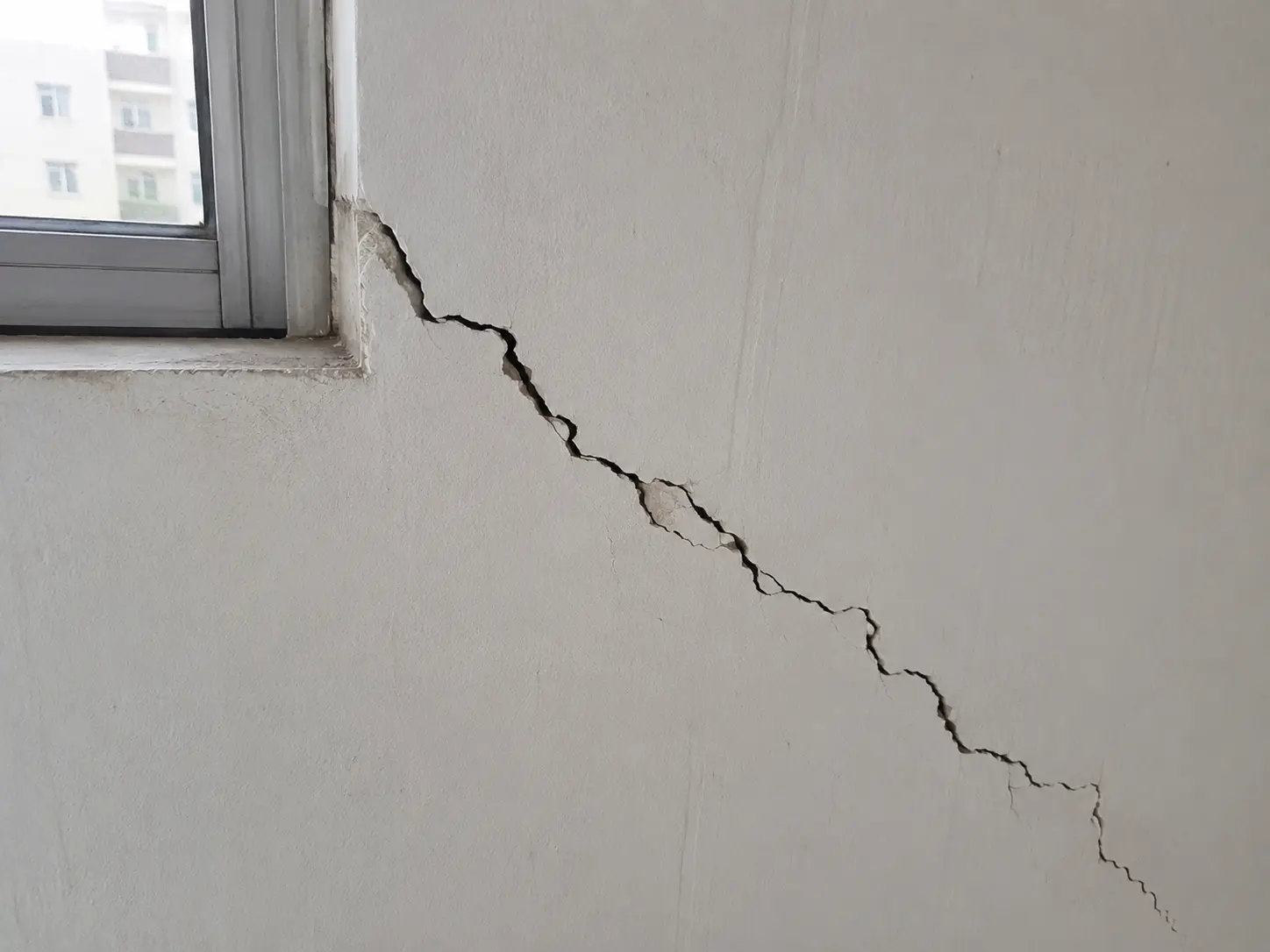
Types of Wall Cracks
Not all cracks are the same — understanding the type helps determine the urgency and repair method.
Diagonal Cracks
Often caused by foundation settlement or differential movement. These are usually structural and require urgent attention.
Horizontal Cracks
Can indicate lateral pressure on walls, moisture expansion or poor bonding between wall and beam. Needs investigation.
Vertical Cracks
Often from thermal expansion or shrinkage. Usually less dangerous but should be monitored for growth over time.
Hairline Cracks
Very thin surface cracks in plaster. Usually cosmetic, but if they keep growing or appear with dampness, get them checked.
Staircase Pattern
Cracks following mortar joints in a staircase pattern indicate differential settlement — a serious structural concern.
Cracks Near Openings
Cracks around doors and windows often result from lintel failure, settlement, or poor construction detailing.
Why Do Wall Cracks Appear?
Foundation Settlement
Uneven soil bearing causes differential movement.
Thermal Movement
Heat expansion and contraction creates stress cracks.
Moisture Damage
Water infiltration weakens plaster and mortar bonds.
Poor Construction
Weak mix ratios, poor curing or bad workmanship.
Structural Overload
Extra floors or loads beyond design capacity.
Frequently Asked Questions
Are all wall cracks dangerous?
No. Hairline cracks in plaster are often cosmetic. But diagonal cracks, growing cracks, or cracks near beams and columns need immediate professional assessment.
Can wall cracks be permanently fixed?
Yes, once the root cause is identified. We use epoxy injection, structural grouting, or plaster repair depending on the crack type and severity.
How do I know if a crack is structural?
Structural cracks are usually wider than 2mm, diagonal, growing over time, or located near load-bearing elements. Our engineers can assess this accurately on-site.
How much does crack repair cost?
Cost depends on crack type, extent and repair method. We provide a detailed assessment and quote after site inspection.
Noticed Cracks in Your Wall?
Get a professional inspection to find the real cause — before small cracks become big problems.