
Beam & Column Crack
Cracks in beams or columns are urgent — they directly affect the structural safety of your building.
Beam & Column Cracks Are
Not Something to Ignore
Beams and columns are the skeleton of your building — they carry the entire load. Cracks in these structural members can indicate overloading, corrosion, poor construction, or seismic damage that threatens the entire structure.
Unlike wall cracks, beam and column cracks require immediate professional assessment. Delay can lead to catastrophic failure.
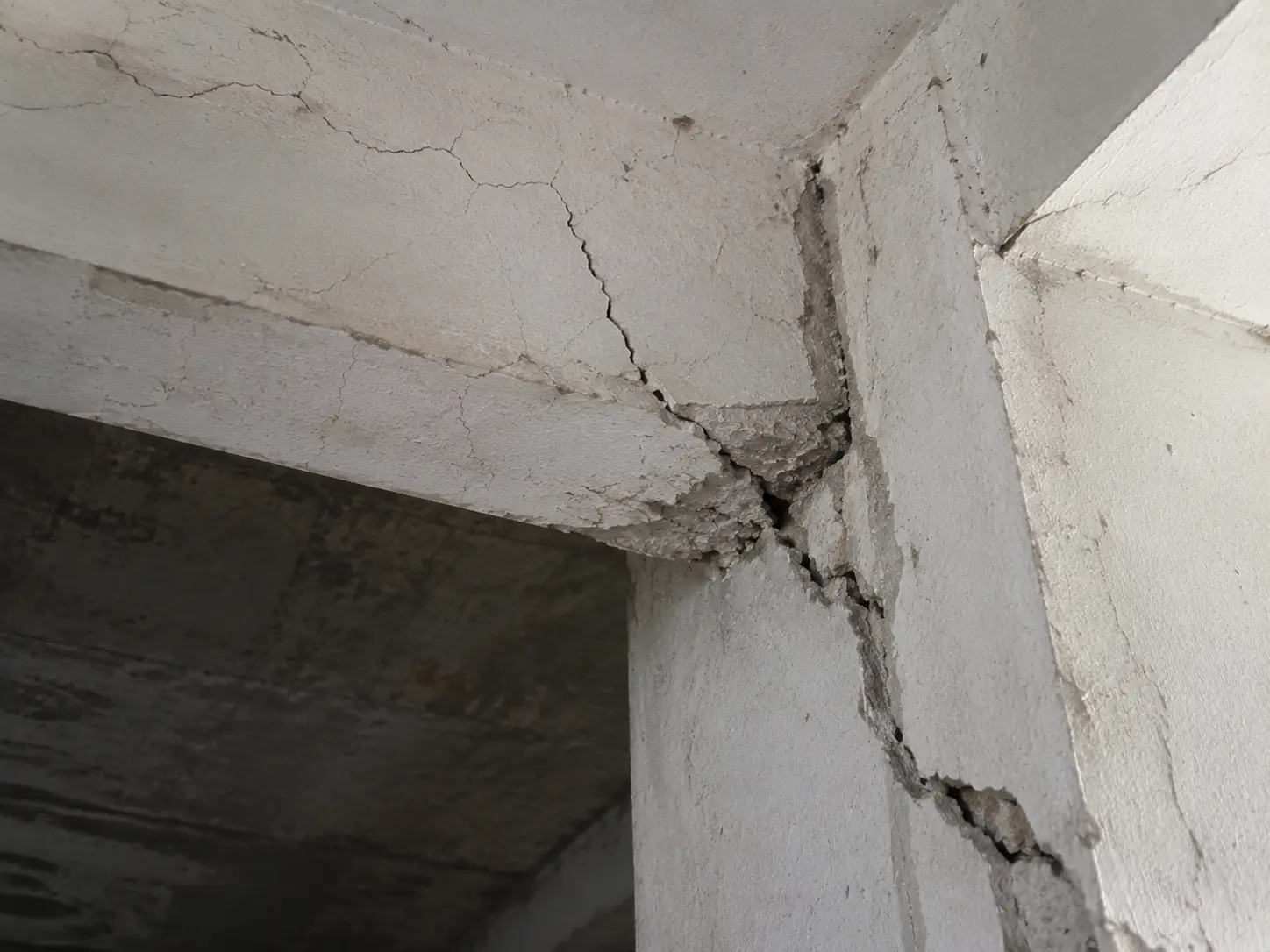
Types of Structural Cracks
Understanding the crack pattern helps determine the severity and urgency of the problem.
Shear Cracks (Diagonal)
45-degree diagonal cracks near beam-column joints indicate shear failure — one of the most dangerous structural crack types.
Flexural Cracks (Vertical)
Vertical cracks at the bottom of beams indicate bending stress — the beam may be carrying more load than designed for.
Corrosion Cracks
Cracks along the rebar line with rust stains indicate reinforcement corrosion — the steel is expanding and breaking the concrete cover.
Concrete Spalling
Chunks of concrete falling off from beams or columns expose rusted rebar — an advanced stage of structural deterioration.
Multiple Crack Patterns
When cracks appear in multiple beams or columns simultaneously, it may indicate foundation problems or overall structural distress.
Joint Area Cracks
Cracks at beam-column junctions are critical — these joints transfer loads between members and failure here affects the entire frame.
Why Do Beams & Columns Crack?
Overloading
Extra floors or loads beyond the original structural design.
Rebar Corrosion
Water and chloride exposure rusts reinforcement steel.
Poor Construction
Weak concrete mix, insufficient rebar, or poor curing.
Foundation Issues
Soil settlement causes uneven load distribution.
Age & Weathering
Decades of exposure degrade concrete strength.
Frequently Asked Questions
Are all beam cracks dangerous?
Not all, but beam and column cracks should always be treated as potentially dangerous until a structural engineer confirms otherwise. The risk of ignoring them is too high.
Can cracked beams be repaired?
Yes. Depending on severity, solutions include epoxy injection, carbon fiber wrapping, steel jacketing, or concrete jacketing. The method depends on the structural assessment.
How urgent is a beam/column crack?
Very urgent. If you notice cracks in beams or columns — especially diagonal cracks, growing cracks, or cracks with exposed rebar — contact us immediately for an emergency assessment.
Can a building collapse from beam cracks?
In severe cases, yes. Structural member failure can lead to progressive collapse. This is why early detection and professional repair is critical — don't wait for the problem to worsen.
Cracks in Your Beams or Columns?
Don't wait — structural cracks need immediate professional assessment. Contact us now.